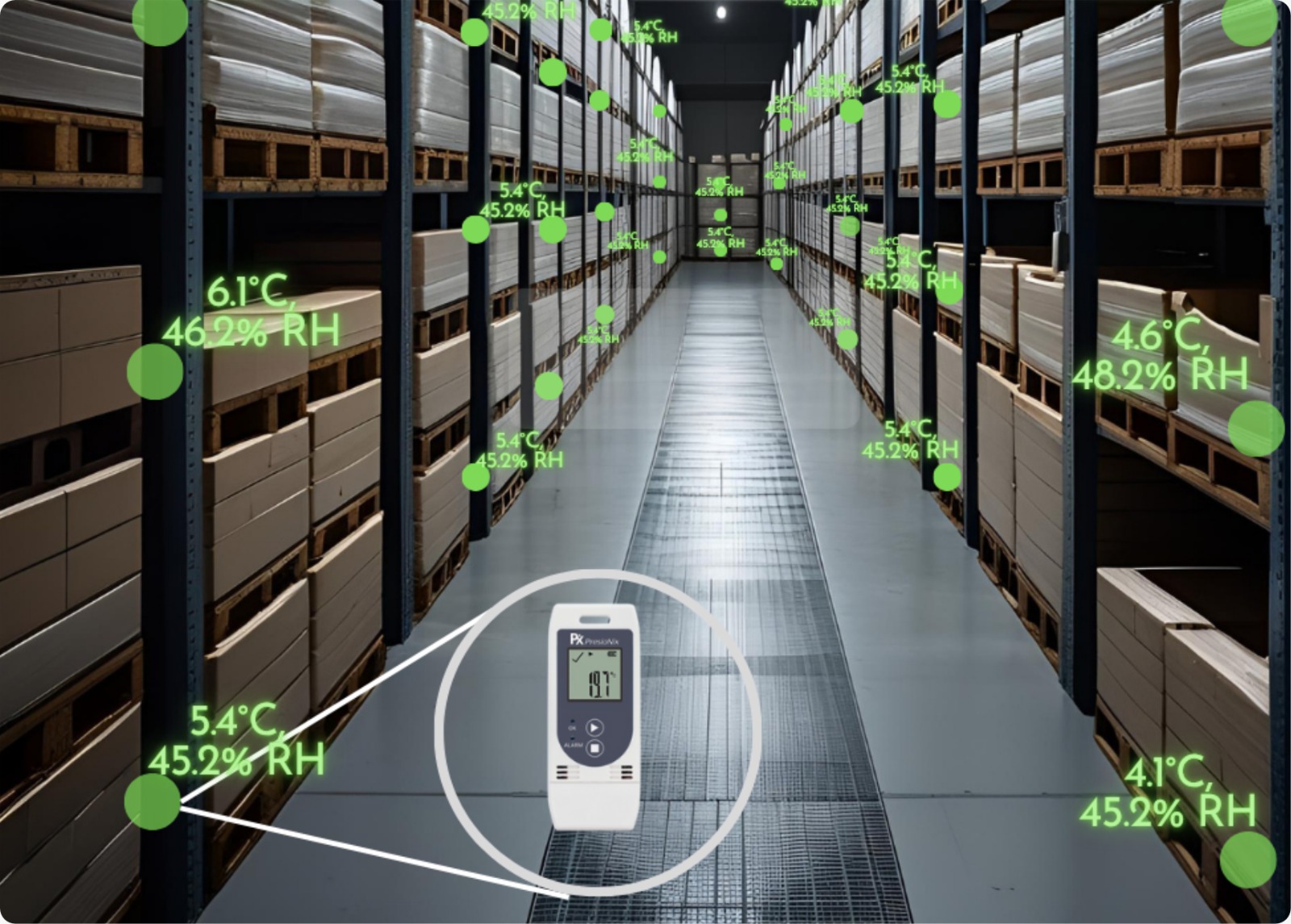
Qualification/Validation of temperature controlled storage, transportation and cold-chain systems
In regulated industries, particularly pharmaceuticals and healthcare, many products and processes are highly sensitive to temperature and humidity variations. Improper environmental control during storage, processing, or distribution can directly impact product quality, safety, and efficacy.
Temperature and humidity mapping is a structured GxP validation activity designed to evaluate and document the environmental performance of temperature-controlled spaces. The objective is to demonstrate that these spaces consistently maintain conditions suitable for their intended use, thereby protecting temperature-sensitive products from harmful excursions.
In this context, the term temperature mapping refers collectively to the assessment of both temperature and relative humidity where applicable.
Temperature and humidity mapping is a systematic, three-dimensional assessment of environmental conditions within a controlled area. It can be applied to a wide range of spaces, including warehouses, cold rooms, refrigerators, freezers, vehicles, stability chambers, and processing areas.
Unlike routine temperature monitoring, which relies on a limited number of sensors, mapping studies use multiple calibrated data loggers positioned throughout the space to capture spatial and temporal variations. This approach provides a comprehensive understanding of how temperature and humidity behave under real operating conditions.
Mapping studies are conducted over a representative time period and typically include:
The results are used to:
The UAE and GCC region are characterized by extreme climatic conditions, including high ambient temperatures, elevated humidity levels, and wide seasonal variations. These environmental factors significantly increase the risk of temperature excursions within pharmaceutical storage, transportation, and distribution systems.
Temperature and humidity mapping is therefore essential to verify that controlled environments consistently maintain conditions required to protect temperature-sensitive pharmaceuticals, vaccines, and biological products, in line with WHO GDP (TRS 961 & TRS 992), FDA, EU-GMP, and local regulatory requirements.
Mapping studies help prevent temperature excursions that could compromise product quality, patient safety, and financial investments.
Global regulations (FDA, WHO, EU-GMP, ISO) require documented evidence. A validated mapping program supports inspection readiness and reduces regulatory risk.
Mapping evaluates the effectiveness of HVAC and refrigeration systems under normal and worst-case conditions, confirming uniform control.
Data-driven justification for sensor placement, alarm limits, and monitoring frequency—reducing cost while improving control.
"International organizations such as WHO, ISPE, USP, and PDA recognize temperature mapping as a fundamental element of good storage and distribution practices."
Temperature mapping is commonly applied to:
Each application requires a tailored approach based on equipment design, product sensitivity, and regulatory expectations.
A robust temperature mapping exercise typically includes:
Definition of objectives, acceptance criteria, scope, logger quantity, and positioning rationale.
Use of calibrated, traceable measurement devices and setting appropriate logging intervals.
Placement of sensors per approved protocol and simultaneous data collection across all locations.
Evaluation of temperature and humidity trends, identification of hot/cold spots and system performance.
Confirmation of equipment accuracy and review of deviations, if any.
Clear conclusions on compliance, guidance on monitoring locations, SOPs, and corrective actions.
Temperature and humidity mapping is a critical requirement across multiple regulated sectors, including:
Temperature mapping should be repeated in the following scenarios:
After significant facility or cooling system changes
Following layout or operational modifications
Periodically, based on risk assessment
During different seasons, where climatic extremes are expected
While historical climate data can support risk assessments, it does not replace physical mapping studies.
"Temperature and humidity mapping is a critical qualification activity for any temperature-controlled space used in regulated industries. When performed correctly, it strengthens environmental control, reduces product loss, supports regulatory compliance, and forms the foundation of an effective GDP and GxP quality system."